



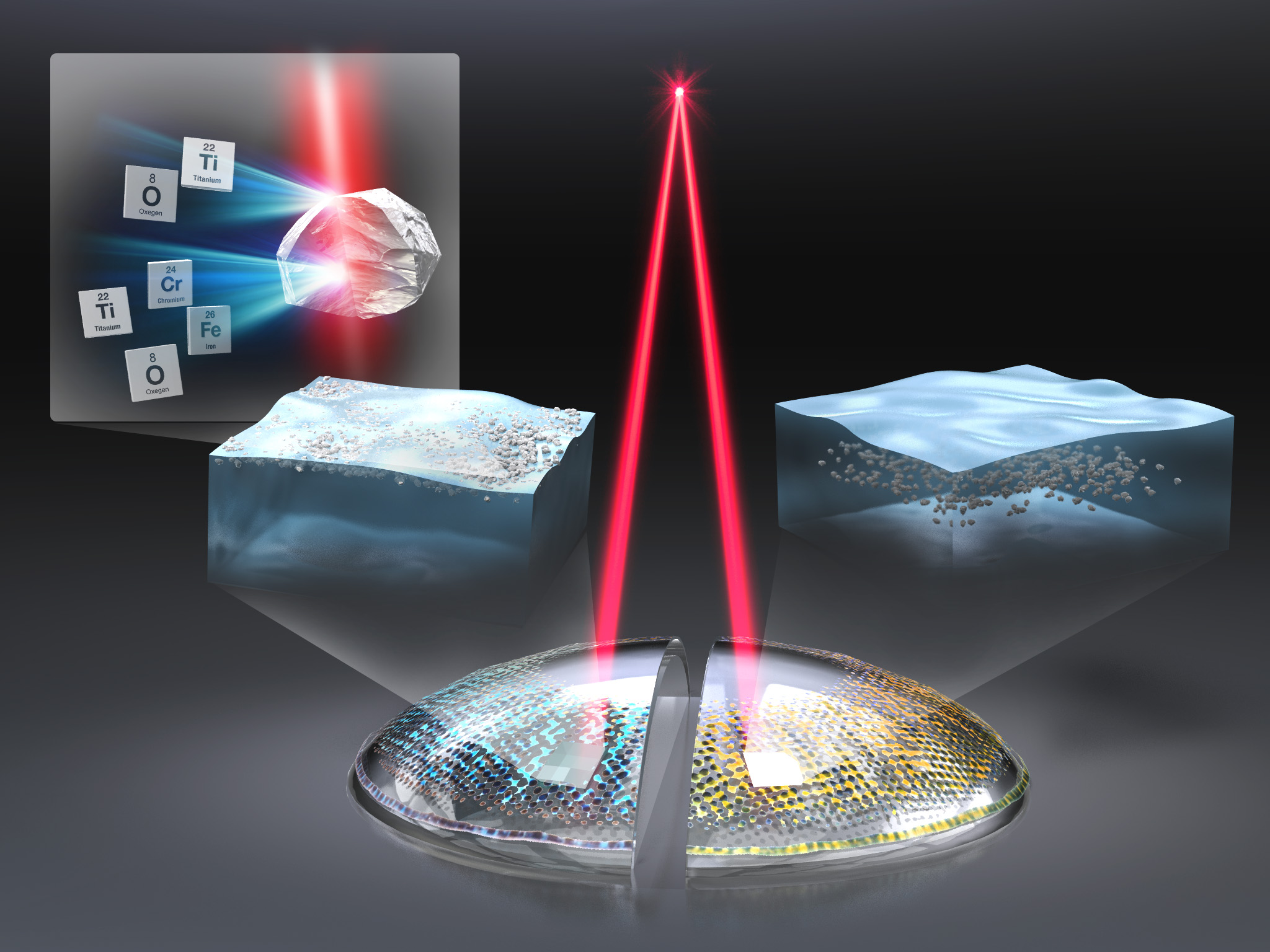
Graphical abstract of this study
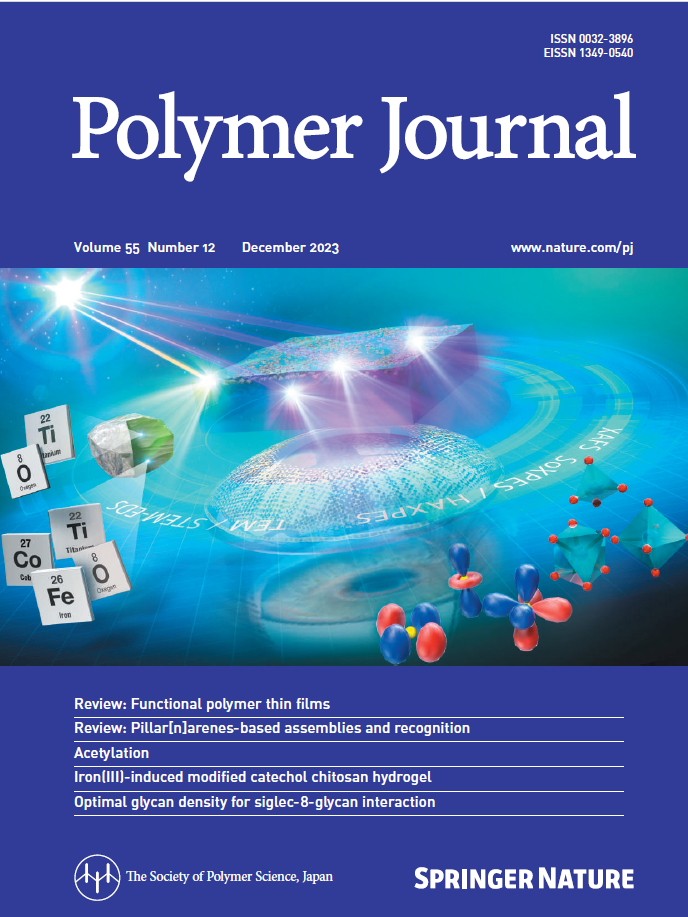
Polymer Journal December 2023 issue
Menicon Co., Ltd. (Headquarters: 3-21-19 Aoi, Naka-ku, Nagoya-shi, Representative Executive Officer and President COO: Koji Kawaura) announces that it has established a method for easily identifying whether pigments contained in ink are present on the top surface of the printing layer of soft contact lenses with iris patterns (hereinafter “color contact lenses”). This study is expected to improve our understanding of color contact lenses.
The original article with the results of this study, "Evaluation of Pigment Distribution in Contact Lenses with Iris Patterns by Multiprobe Analysis Methods" was published in the December 2023 issue of Polymer Journal, an academic journal specialized in polymers and published by the Nature Publishing Group. This paper has also been adopted as cover art for the journal.
Color contact lenses have been increasingly used, mainly in young people, as a product that gives more impressive eyes, in addition to vision correction. However, several issues have been reported and one of them is that there are some products in which the pigment components in the ink used for printing are exposed on the lens surface, which may damage the eyelids or corneal surface of the user*1.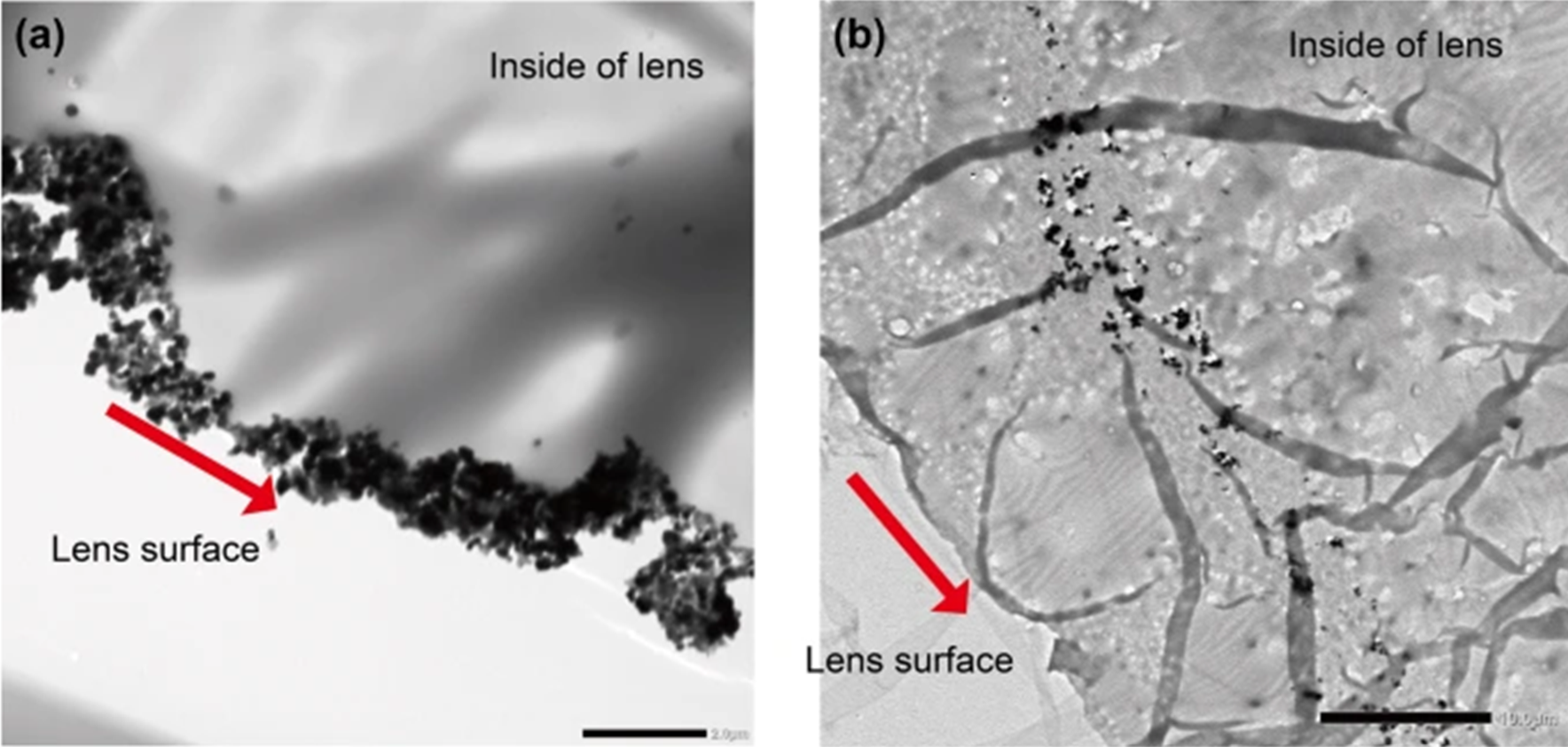
TEM photograph
To address this problem, Menicon developed a method to observe the distribution structure of pigments in the printing layer by using a transmission electron microscopy (TEM) as notified in the "Observation of Sandwich Structure of Circle Lens Using Transmission Electron Microscopy published in `Microscopy`, a journal specialized in microscopy”*2, and the research results were published in the journal in February 2021. In addition, the results of the investigation and classification of the trend of print layers of marketed color contact lenses by TEM observation have been published in the Journal of Japan Contact Lens Society*3. However, observation using TEM requires a high level of skill in sample preparation and long measurement time.
Menicon conducted research on an analytical procedure for the pigment components contained in the printed layer of marketed color contact lenses at a cutting-edge research facility (Aichi Synchrotron Radiation Center [BL5S1], large synchrotron radiation SPring-8 [BL46XU])*4 which is used for research on the material structure to realize high-performance contact lenses. We successfully identified pigment elements on the outermost surface by directly irradiating a lens with a special light (synchrotron radiation) using X-ray absorption fine structure (XAFS)*5. It is expected that we can quickly and minutely sort out lenses in which pigment accumulates on the surface by screening using XAFS measurement, which enables measurement in a short time, in combination with TEM analysis that enables the observation of detailed pigment positions.
Menicon will aim to develop high-function products and manufacture high-quality products by actively utilizing the cutting-edge research facility and provide information for their safe use to contact lens users and healthcare professionals involved in prescriptions, and thus, continue to contribute to “Infinite Vision”.
*1 Ueda, Journal of the Eye 31 (11): 1569-1575, 2014
*2 News in February 2021, article published in Microscopy
*3 Journal of Japan Contact Lens Society vol. 63 in 2021 pages 156-162
*4 Aichi Synchrotron Radiation Center (BL5S1) Address: 250-3, Minamiyamaguchi, Seto-shi, Aichi, Japan c/o "Knowledge Hub Aichi"
Large synchrotron radiation SPring-8 (BL46XU) Address: 1-1-1, Kouto, Sayo-cho, Sayo-gun, Hyogo
Large synchrotron radiation SPring-8: RIKEN's facility produces the world's highest-performance synchrotron radiation and is located in the Harima Science Garden City in Hyogo. The Japan Synchrotron Radiation Research Institute provides user support. Synchrotron radiation contains thin and strong electromagnetic wave. It is generated when the electron is accelerated to a speed almost equal to that of light, and the forward direction is bent by an electromagnet. At SPring-8, synchrotron radiation is used to conduct research ranging from nanotechnology, biotechnology, or industrial use.
*5 X-ray absorption fine structure (XAFS): An analytical method that is a type of X-ray absorption spectroscopy and it enables the acquisition of scientific information such as the valence and local structure of elements in an element-specific manner.